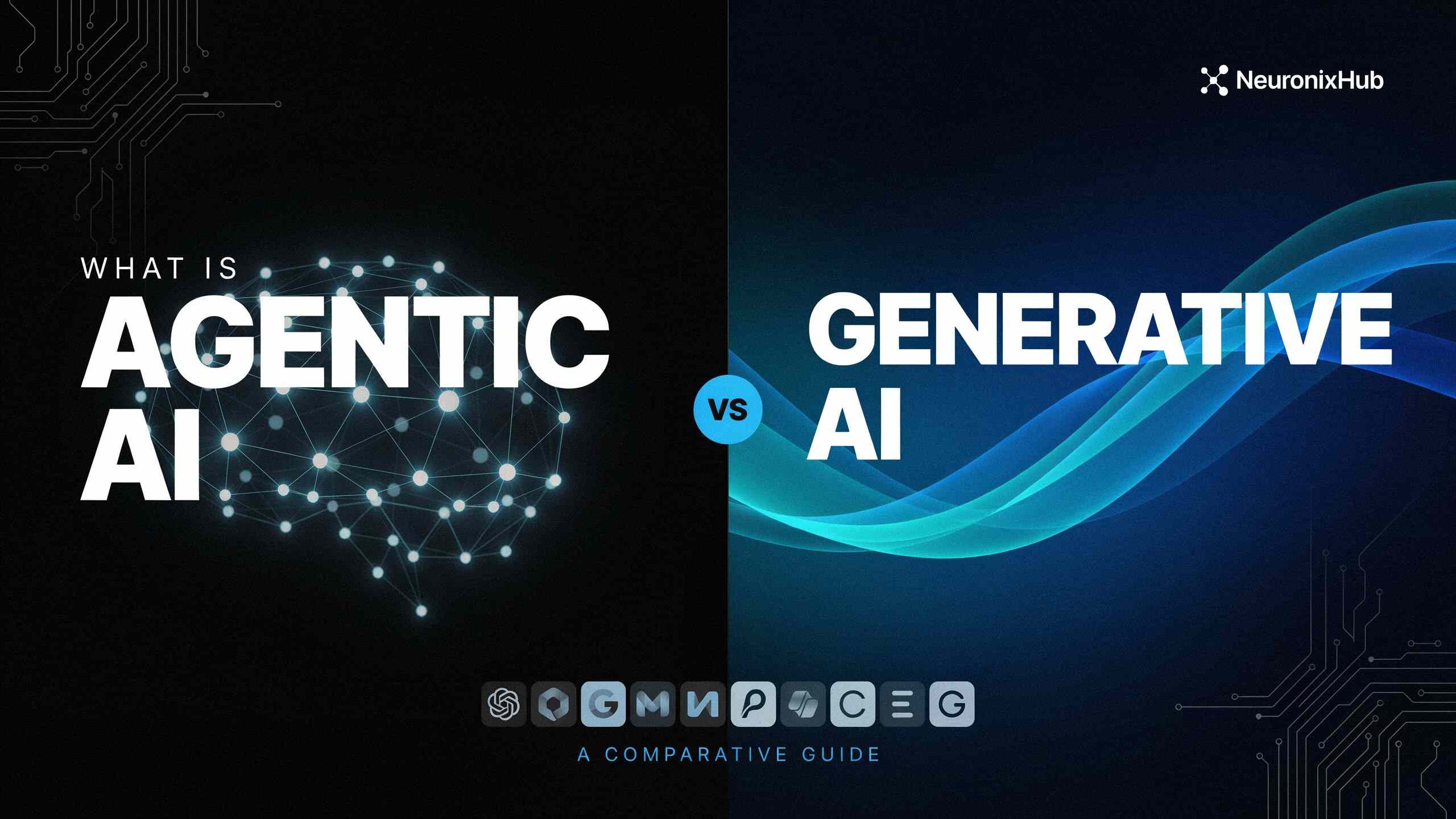
Ask ChatGPT to write a blog post, and it drafts one in seconds. Ask an AI agent to research a topic, write the post, format it for your CMS, and schedule it for publishing — and it just does the whole thing, no follow-up prompts needed. That shift is exactly why so many people are searching for what is agentic AI vs generative AI right now. The two terms get thrown around interchangeably, but they describe genuinely different technologies, and mixing them up can lead you to the wrong tool for the job.
Both are reshaping how we work, just in different ways. Generative AI creates: text, images, code, video. Agentic AI acts: it plans, decides, and executes tasks with minimal hand-holding. Getting clear on agentic AI vs generative AI isn’t just semantics — it determines which tools actually solve your problem in 2026. Let’s start by defining each one on its own.
What Is Generative AI?
Generative AI refers to systems trained to create new content — text, images, audio, video, or code — based on patterns learned from massive datasets. Instead of following fixed rules, these models predict what comes next, whether that’s the next word in a sentence or the next pixel in an image.
How Generative AI Works Generative models, such as large language models (LLMs) and diffusion models, are trained on huge datasets to recognize patterns and relationships. Given a prompt, they generate original output that mirrors what they’ve learned, without copying it directly.
Common Examples of Generative AI Think ChatGPT drafting an email, Midjourney creating artwork, or GitHub Copilot suggesting a line of code. Each one takes a prompt and produces something new in response.
Strengths and Limitations of Generative AI These tools are fast and genuinely creative, but they stay reactive. They wait for instructions and can’t independently carry out multi-step tasks — which is exactly where agentic AI picks up.
What Is Agentic AI?
Agentic AI goes a step further than generation. Rather than simply responding to a prompt, it pursues a goal — breaking it into steps, deciding how to complete each one, and adjusting course when something doesn’t go as planned. It’s the difference between an assistant who waits to be told what to do and one who just gets it done.
How Agentic AI Works Give an agent a goal, like “research competitors and summarize their pricing.” It plans the steps, chooses which tools or apps to use, executes each action, and checks its own results as it goes.
Key Capabilities That Set Agentic AI Apart Agentic systems combine reasoning, memory, and real tool use. They can browse the web, open files, and adapt mid-task, all without constant human input.
Common Examples of Agentic AI Claude’s computer use, Cursor’s agent mode, and CrewAI’s multi-agent workflows all show this autonomy in action — completing entire workflows on their own rather than waiting for the next instruction.
Agentic AI vs Generative AI: Key Differences Explained
With both defined, it’s worth putting them side by side. The differences go beyond how each is built — they shape what each is actually good for.
Autonomy and Decision-Making Generative AI responds only when prompted; it has no goals of its own. Agentic AI sets its own intermediate steps and decides what to do next without waiting for instructions at every stage.
Task Execution vs. Content Creation Generative AI produces a finished piece of content: text, an image, a line of code. Agentic AI executes entire workflows, pulling in tools, apps, and data to complete a task start to finish.
Memory and Context Handling Generative AI typically works within a single conversation. Agentic AI retains context across steps and sessions, which lets it handle long-running, multi-part work.
Human Involvement Required Generative AI needs a prompt for every output. Agentic AI needs a goal, then largely manages itself — checking in only when it hits something it can’t resolve alone.
Agentic AI vs Generative AI: Side-by-Side Comparison
Sometimes the clearest way to understand agentic AI vs generative AI is to see it laid out. Here’s a quick-reference breakdown of how they compare on the factors that matter most.
| Factor | Generative AI | Agentic AI |
| Primary function | Creates content | Executes tasks |
| Trigger | Responds to a prompt | Pursues a goal |
| Autonomy | Reactive, needs guidance | Proactive, self-directed |
| Output | Text, images, audio, video, code | Completed multi-step workflows |
| Memory | Limited to a single session | Retains context across steps |
| Tool use | Minimal or none | Uses apps, APIs, and data sources |
| Human input | Required at every step | Required upfront, then minimal |
| Example tools | ChatGPT, Midjourney, Jasper | Claude (computer use), CrewAI, n8n |
At a glance, generative AI is your creative partner; agentic AI is your task manager. Neither replaces the other — they solve different problems, which brings us to when you’d actually reach for each one.
When to Use Generative AI vs Agentic AI
Understanding the difference is one thing. Knowing which to reach for is another. The right choice comes down to whether you need something created or something done.
Best Use Cases for Generative AI Reach for generative AI when drafting blog posts, designing marketing visuals, writing code snippets, or brainstorming ideas — anywhere you want a starting point you’ll refine yourself.
Best Use Cases for Agentic AI Reach for agentic AI on research-heavy tasks, multi-step workflows, or repetitive processes like triaging support tickets, updating CMS content, or running outreach campaigns end to end.
Can They Work Together? Yes, and increasingly they already do. Most agentic systems rely on generative AI at their core — the agent uses an LLM to reason and generate content, then adds planning and execution on top. Claude and ChatGPT already blur this line, offering conversational generation and autonomous agent modes in the same platform.
With that framework in mind, here’s which tools actually deliver in 2026.
Top Agentic AI Tools to Try in 2026
These platforms range from consumer-friendly assistants to developer-grade frameworks, each automating real, multi-step work.
Claude — Best for Safety-Focused, Long-Horizon Agent Tasks Claude’s computer use feature lets it navigate desktops, fill spreadsheets, and complete workflows autonomously, backed by Anthropic’s safety-first design.
Claude Code — Best for Autonomous Coding and Debugging Anthropic’s terminal-based coding agent handles refactors, testing, and multi-file edits with minimal supervision.
Cursor — Best AI-Native IDE for Developers A full IDE with agent mode that writes, tests, and debugs across entire codebases.
Microsoft Copilot — Best for Microsoft 365 Enterprise Teams Deeply embedded in Word, Excel, and Teams, with Copilot Studio for building custom agents.
n8n — Best Open-Source Workflow Automation Framework A self-hostable platform for building automated, multi-app workflows.
CrewAI — Best for Multi-Agent Orchestration Coordinates multiple role-based agents working toward a shared goal.
Genspark — Best All-in-One Autonomous Workspace Routes tasks across dozens of models to produce research, decks, and reports.
Perplexity Comet — Best Agentic Browser for Everyday Users Understands your open tabs and completes browsing tasks on its own — now free.
Top Generative AI Tools to Try in 2026
Agentic AI gets the hype, but generative AI still powers the everyday creative and technical work most people rely on daily. Here’s what leads each category right now.
ChatGPT — Best All-Around Generative AI Assistant OpenAI’s flagship handles writing, coding, and analysis with real versatility and a massive GPT store.
Claude — Best for Long-Form Writing and Reasoning Known for natural, human-like output and strong reasoning, especially favored by developers and writers.
Google Gemini — Best for Google Workspace Integration Built directly into Gmail, Docs, Sheets, and Slides, with Workspace Intelligence pulling context across your account.
Midjourney — Best for AI Image Generation Delivers top-tier aesthetic quality and handles complex prompts through Discord.
Adobe Firefly — Best for Commercially Safe Image Generation Trained on licensed content, which lowers IP risk for brand and marketing use.
Runway Gen-3 — Best for AI Video Generation Produces cinematic short clips with strong visual consistency.
GitHub Copilot — Best for Code Autocomplete Widely adopted inline suggestions across major IDEs.
Jasper — Best for Marketing and Brand Content Purpose-built for on-brand blog posts, ad copy, and campaigns.
How to Choose the Right AI Tool for Your Needs
With strong options on both sides of the generative AI vs agentic AI divide, the right pick isn’t about finding the single “best” tool — it’s about matching the tool to your actual workflow.
Questions to Ask Before You Decide Start with what you actually need: content creation or task execution? A single output or an ongoing workflow? Consider how much oversight you’re comfortable giving up, whether the tool fits into your existing apps, and how technical your team is. A marketer drafting copy has very different needs than an operations team automating ticket triage.
Budget and Scalability Considerations Most professional tools now sit around $20/month for individual plans, but costs scale fast with usage, seats, or API calls. Free tiers are worth testing before you commit. If you’re choosing for a team, weigh setup time too — no-code platforms get non-technical users running quickly, while frameworks like LangChain or CrewAI demand real engineering effort upfront.
Final Thoughts: Agentic AI vs Generative AI in 2026 and Beyond
This was never really an either-or choice. Generative AI taught machines to create. Agentic AI is teaching them to follow through. Together, they’re quietly rewriting what “getting help from AI” means — less like using a tool, more like delegating to a capable teammate who doesn’t need hand-holding.
The smartest move in 2026 isn’t picking a side in the agentic AI vs generative AI debate — it’s building a stack: a generative assistant for the ideas and drafts only you can shape, an agentic tool for the repetitive work eating your time. Start small, test what actually saves you hours instead of just looking impressive, and let your workflow — not the hype — decide where each one fits.
Frequently Asked Questions
Is ChatGPT agentic AI or generative AI right now?
ChatGPT is primarily generative AI, since it creates text, images, and code from prompts. Its Agent mode adds agentic capabilities, letting it browse the web and complete multi-step tasks on its own.
Is agentic AI the future of generative AI tools?
Not a replacement — an evolution. Agentic AI builds on generative AI’s core reasoning and adds planning plus autonomous execution. Most future tools will likely blend both.
Can agentic AI fully replace human workers today?
No. Agentic AI handles repetitive, well-defined tasks efficiently, but it still needs human oversight for judgment calls, creativity, and ethical decisions in complex situations.
Which industries benefit most from agentic AI tools?
Customer service, software development, marketing automation, and enterprise operations see the biggest gains, since these fields involve repetitive, multi-step workflows; agentic AI can run with minimal supervision.
What is agentic AI vs generative AI in simple terms?
Generative AI creates content when prompted. Agentic AI pursues goals independently, planning steps and taking real-world actions across apps and tools without constant human direction.