A blank screen and a slipping publishing schedule are how most blogs quietly die. Not from a lack of ideas, but from the sheer time cost of research, outlining, drafting, and editing one post after another, especially when blogging competes with a full-time job or a dozen other priorities. That gap is exactly why so many bloggers have turned to AI writing tools for bloggers over the past year: not to replace their voice, but to take back the hours that used to vanish into a blinking cursor.
The best AI writing tools for bloggers in 2026 don’t sound like AI anymore. They help sharpen angles, structure SEO-ready outlines, and produce drafts worth shaping into something genuinely yours. The catch is that most of these tools weren’t built with bloggers specifically in mind, and the wrong pick can cost more time than it saves. Before getting into our top picks for the year, here’s what actually separates a useful AI writing tool from one that just sounds impressive in its marketing copy.
What to Look for in AI Writing Tools for Bloggers
Not every AI writing tool deserves a spot on a blogger’s shortlist. Four practical factors separate the ones worth paying for from the ones that just look good in a demo.
Content Quality and Tone Customization
The output should read like a person wrote it, not a template filled in by a machine. Look for adjustable tone settings so your blog keeps its personality from post to post, instead of flattening into the same generic AI voice every other site is now using.
SEO Features and Keyword Integration
Strong tools weave keywords into headings and body copy without forcing awkward phrasing. Many of the best AI writing tools for bloggers now include built-in keyword research or SERP analysis, which saves a separate research step entirely.
Plagiarism Detection and Originality
Originality checks matter for more than ethics. Duplicate or overly generic content can quietly tank your search visibility, so prioritize tools with plagiarism scanning built directly into the workflow.
Pricing and Free Trial Options
Test before you commit. A free trial or a generous free tier lets you judge real output quality against your specific niche before any money changes hands, which matters more than any feature list.
How We Tested and Ranked These AI Writing Tools
Ranking AI writing tools fairly takes more than generating a few sample paragraphs and calling it a day, so the rankings below are built around how bloggers actually work, not how vendors market themselves.
Our Evaluation Criteria
Each tool was judged on five practical dimensions: output quality on real blog-length content, how much editing a draft needed before it was publish-ready, SEO and keyword integration, pricing relative to value, and consistency across multiple writing sessions. Tools that defaulted to repetitive structures or needed heavy rewrites lost points fast, regardless of how polished their landing page looked.
Who Each Tool Is Best Suited For
No single tool fits every blogger, so use case mattered as much as raw output. Solo hobby bloggers, SEO-focused creators, and small content teams all need different things from an AI writing tool, and a budget pick that’s perfect for a beginner can feel restrictive for someone running a high-volume niche site. The rankings below reflect that distinction throughout.
The Best AI Writing Tools for Bloggers in 2026
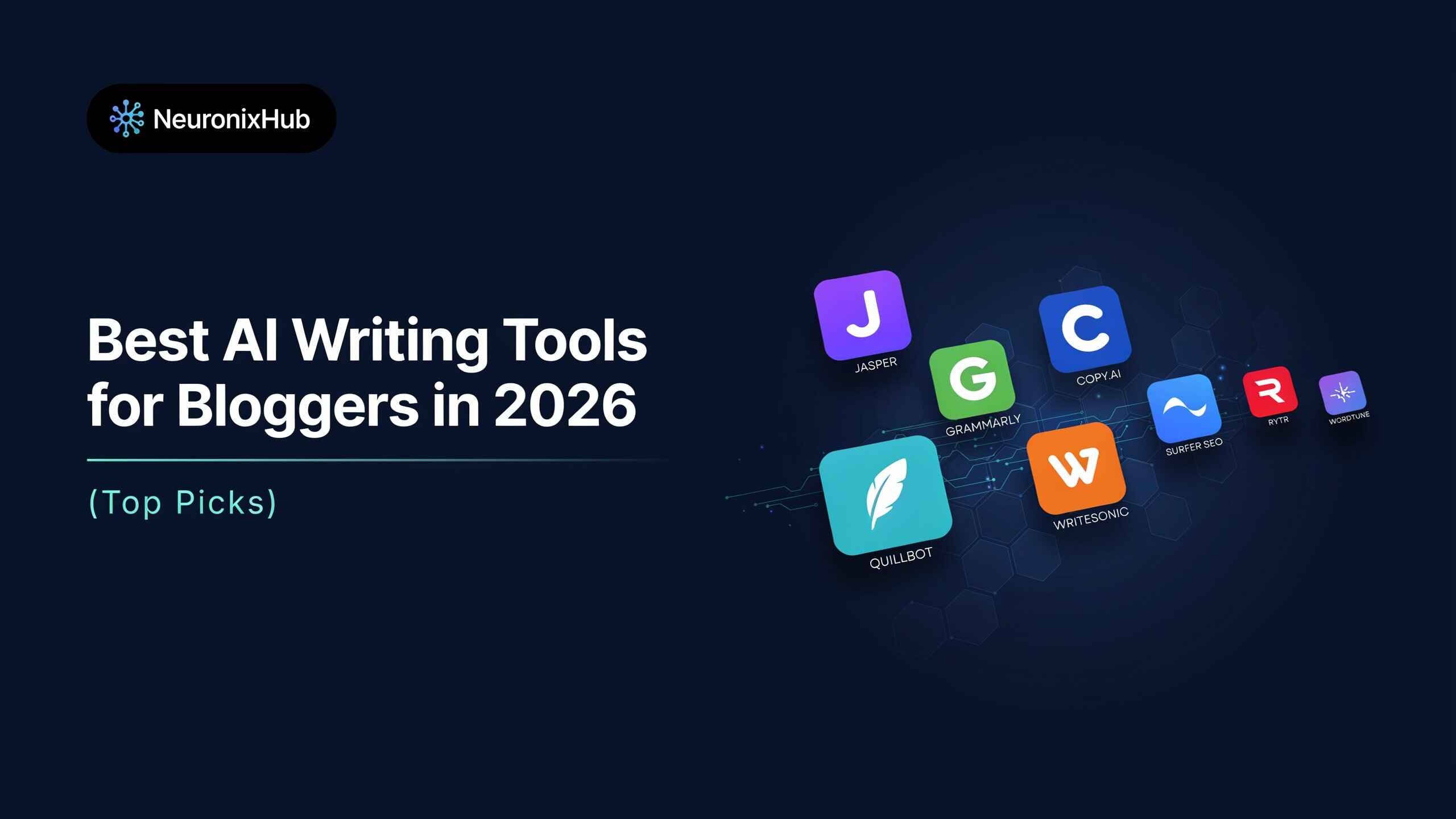
Nine standout platforms made the cut, each excelling at a distinct part of the blogging workflow, from first draft to final optimization pass.
1. ChatGPT (GPT-5) — Best Overall for Bloggers
Versatile and dependable across nearly any topic, ChatGPT handles brainstorming, drafting, and editing without forcing you into a rigid template.
2. Claude (Opus) — Best for Natural, Long-Form Writing
Claude holds structure and coherence better than most rivals across longer pieces, with noticeably fewer factual slip-ups in research-heavy posts.
3. Frase — Best for SEO Research and Content Briefs
Frase analyzes top-ranking pages for your target keyword and builds a content brief from that data, turning guesswork into a research-backed starting point.
4. Surfer SEO — Best for On-Page Optimization Scoring
Real-time scoring guides keyword density, structure, and readability as you write, giving you a concrete target instead of a vague sense of “good enough.”
5. Jasper AI — Best for Brand Voice and Team Collaboration
Jasper’s tone controls and collaboration features suit marketing teams that need consistent brand voice across multiple writers, not just a single blogger.
6. Writesonic — Best All-in-One Blogging and SEO Platform
Drafting, optimization, and publishing live in one workspace here, which trims the number of tools a growing blog needs to juggle.
7. Koala AI (KoalaWriter) — Best for One-Click, Rank-Ready Articles
KoalaWriter turns a single target keyword into a publish-ready, SEO-optimized draft, which makes it a favorite among affiliate bloggers chasing volume.
8. Rytr — Best Budget-Friendly Pick
Affordable and no-frills, Rytr remains one of the easiest entry points for bloggers testing AI-assisted writing for the first time.
9. Copy.ai — Best for Repurposing Blog Posts into Social Content
Copy.ai converts long-form posts into platform-ready social captions quickly, useful for bloggers who also manage their own promotion.
10–15. Other Notable Mentions
NeuronWriter, Scalenut, INK Editor, RightBlogger, eesel, and Grammarly round out the list. Each serves a narrower need, from SEO-first content planning to final-pass editing, rather than competing head-to-head with the nine above.
Comparison Table: AI Writing Tools at a Glance
Nine strong options, side by side, make the differences click faster than reading nine separate reviews.
| Tool | Starting Price | Best Use Case |
| ChatGPT (GPT-5) | $20/month | All-around drafting and brainstorming |
| Claude (Opus) | $20/month | Long-form, natural-sounding articles |
| Frase | $15/month | SEO research and content briefs |
| Surfer SEO | ~$79/month | On-page optimization scoring |
| Jasper AI | $49/month | Brand voice, team collaboration |
| Writesonic | $16/month | All-in-one blogging and SEO |
| Koala AI | Free trial available | One-click, SEO-ready articles |
| Rytr | $9/month | Budget-friendly drafting |
| Copy.ai | Free tier available | Repurposing posts into social content |
Pricing in this space shifts often, so treat these as starting points rather than fixed numbers. Always check the provider’s site directly before subscribing.
How to Choose the Right AI Writing Tool for Your Blog
Feature lists only get you so far. The real question is which tool fits your current stage, budget, and goals, not which one has the longest spec sheet.
Best for Beginner Bloggers: Rytr or ChatGPT Plus
Publishing once or twice a month? Rytr’s low cost and simplicity make it easy to learn without overwhelm, while ChatGPT Plus offers more flexibility for brainstorming and varied content types as your needs grow.
Best for Scaling a Content Team: Jasper AI or Writesonic
Once multiple writers are involved, brand consistency becomes the priority. Jasper’s voice controls and Writesonic’s all-in-one workflow both help teams keep a unified tone across a higher publishing volume.
Best for SEO-First Bloggers: Frase or Surfer SEO
If organic traffic drives your growth, Frase’s content briefs and Surfer’s optimization scoring give you a research-backed framework that generic writing tools simply can’t replicate on their own.
How to Use AI Writing Tools Without Losing Your Voice
Picking the right tool is only half the equation. How you use it determines whether your blog still sounds like you, or starts blending into the flood of generic AI content already crowding search results.
Editing AI Output for Authenticity
Treat every AI draft as a starting point, not a finished post. Add personal anecdotes, specific examples from your own experience, and the phrasing quirks that make your writing recognizably yours. Cutting filler and varying sentence rhythm goes a long way toward making a draft feel written, not generated.
Avoiding Google’s AI Content Pitfalls (E-E-A-T Considerations)
Google’s E-E-A-T guidelines reward experience, expertise, authority, and trust, qualities pure AI output tends to lack. Strengthen your content by adding original insights, citing credible sources, and demonstrating real firsthand knowledge of your topic. Unedited, mass-produced AI content underperforms for exactly this reason: it skips every signal that tells Google a real person with real knowledge wrote it.
Final Verdict: The Best AI Writing Tool for Your Blogging Needs
There’s no single best AI writing tool for bloggers, only the right one for where you are right now. A beginner testing the waters needs something different than a team publishing daily, which is why this list leans on fit over hype. What matters isn’t which logo you pick, it’s whether you keep editing, questioning, and layering your own perspective onto every draft these tools hand you. The bloggers thriving in 2026 aren’t the ones letting AI write for them; they’re the ones using it to clear the busywork so their actual voice has room to show up. Start with one tool, learn its quirks, and build from there. The blank page was never really the enemy. Hesitation was, and that’s the one problem no AI writing tool can solve for you.
Frequently Asked Questions About AI Writing Tools for Bloggers
What are the best AI writing tools for bloggers in 2026?
ChatGPT, Claude, Frase, and Writesonic currently lead the field, each excelling at a different part of the blogging workflow. The right pick depends on your budget, publishing volume, and whether SEO research matters more to you than raw writing speed.
Can AI writing tools for bloggers affect SEO rankings?
Yes, mostly through how they’re used. Generic, unedited AI output tends to underperform, while AI-assisted content that’s edited, fact-checked, and personalized often ranks just as well as fully manual writing, sometimes better, thanks to more consistent publishing.
What’s the best free AI writing tool for bloggers?
Rytr offers one of the most generous free tiers, making it a solid starting point for beginners. ChatGPT’s free version also works well for brainstorming, though output quality improves noticeably on paid plans.
Can the best AI writing tools replace bloggers entirely?
No. AI tools speed up drafting and research, but they can’t replicate firsthand experience, original opinions, or genuine expertise, the exact qualities Google rewards. Bloggers seeing real results treat AI as an assistant, not a replacement.
How much do AI writing tools for bloggers cost in 2026?
Pricing ranges widely, from free tiers and $9/month budget tools like Rytr to $79/month or more for advanced SEO platforms like Surfer SEO. Most solo bloggers find $20 to $50 a month covers a solid, capable toolkit.