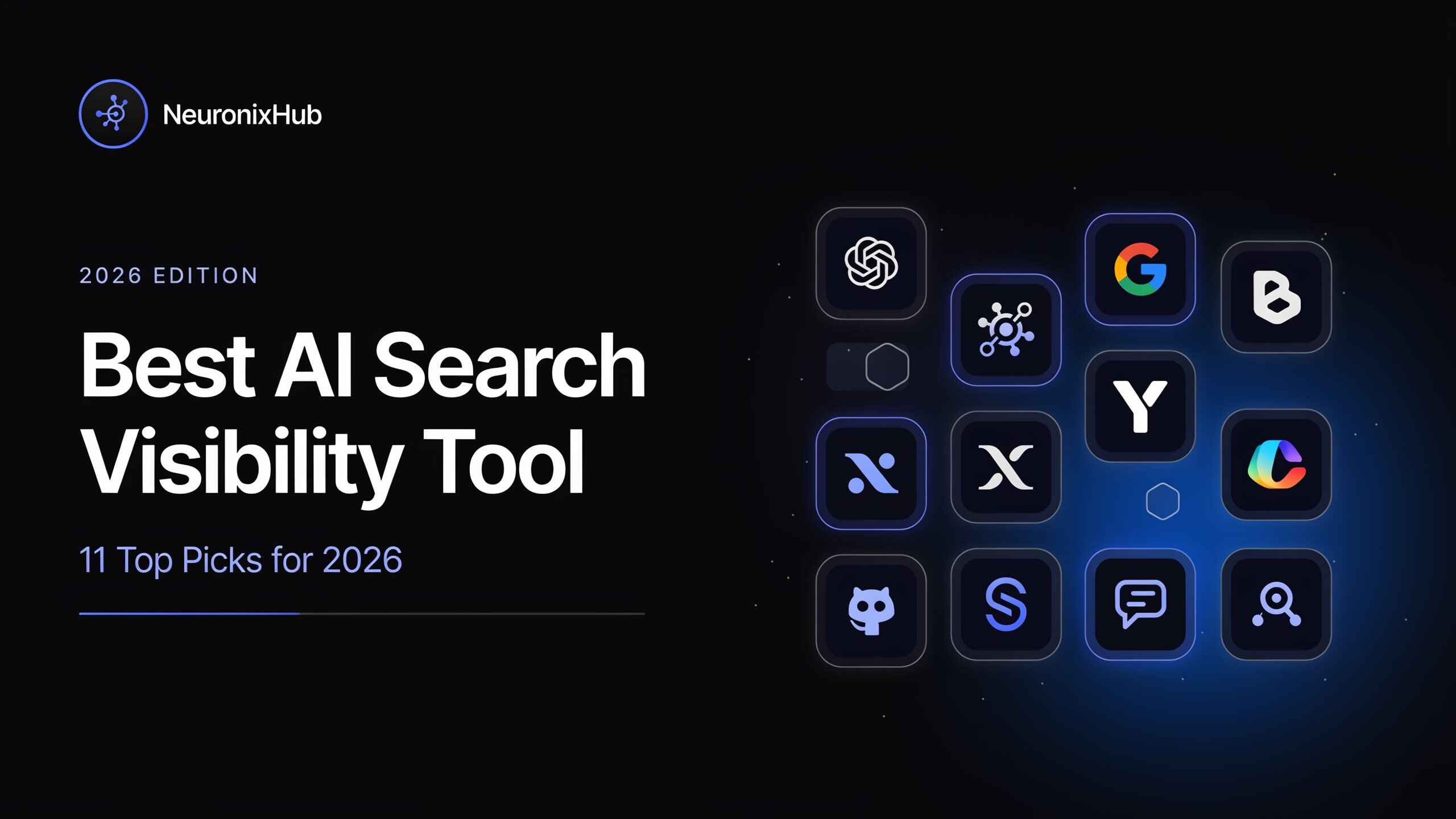
Search doesn’t work the way it used to. When someone asks ChatGPT which project management software to try, or types a question into Google and gets an AI Overview instead of ten blue links, your brand is either part of that answer or it doesn’t exist. No click, no impression, no second chance to show up later in the scroll.
That shift is why an AI search visibility tool has quietly become one of the most important pieces of marketing software a brand can own in 2026. These tools track whether ChatGPT, Perplexity, Gemini, and Google AI Overviews mention your brand, how you stack up against competitors, and where the gaps are. Some just monitor. Others help you close the gap. Which one you need depends on your team size, budget, and how far along you already are — and that’s what this guide walks through.
What Is an AI Search Visibility Tool (And Why You Need One in 2026)
An AI search visibility tool tracks how often, and how favorably, your brand shows up inside AI-generated answers instead of a traditional search results page.
How AI Search Differs from Traditional SEO
Traditional SEO is a race for position on a page full of links. AI search skips the page entirely and hands the user one answer, built from sources the model already trusts. There’s nothing to scroll past — either you’re in that answer or you’re not. Rankings haven’t disappeared, but they’re no longer the finish line. Getting cited as a reliable source is.
Why Brand Visibility in ChatGPT, Gemini, and Perplexity Now Matters
A growing share of buyers now ask an AI tool for a recommendation before they ever open Google. If your brand doesn’t come up in that answer, you lose the customer at the exact moment they’re deciding what to buy — and it happens quietly, with nothing showing up in your analytics to warn you.
How We Evaluated the Best AI Search Visibility Tools
Plenty of platforms now claim to track “AI visibility,” but not all of them hold up under scrutiny, so we set criteria before comparing anything.
Key Features We Looked For
We looked at engine coverage across ChatGPT, Gemini, Perplexity, and Google AI Overviews, plus citation tracking, competitor benchmarking, and sentiment analysis. Just as important: does the tool stop at reporting, or does it tell you why you weren’t mentioned and what to fix? Pricing transparency and setup time mattered too.
Our Testing Methodology
We compared each platform’s tracked prompt volume, engine coverage claims, and reporting depth, checking vendor claims against independent write-ups rather than trusting marketing pages at face value. We also weighed how accessible each tool is across business sizes — an enterprise-built platform is often wasted money on a solo marketer, and vice versa.
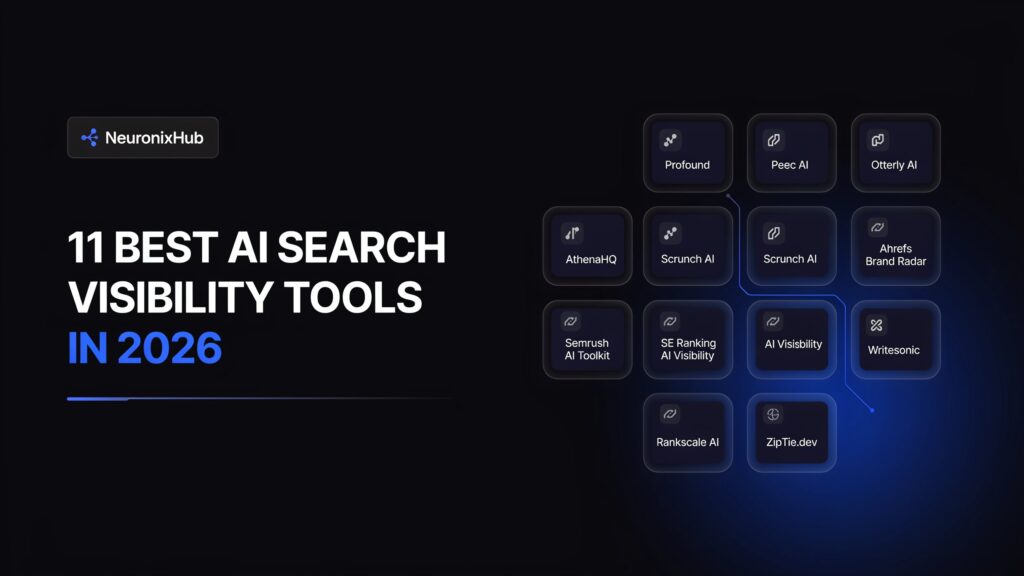
The 11 Best AI Search Visibility Tools in 2026
After digging into pricing, engine coverage, and real user feedback, these 11 stood out for different budgets and use cases.
1. Profound — Best for Enterprise-Level AI Search Monitoring
Tracks 10+ engines with enterprise-grade reporting and deep competitive benchmarking, though the price tag reflects it.
2. Peec AI — Best for Clean, Simple AI Visibility Analytics
Strips its dashboard down to three numbers — visibility, position, sentiment — and resists the urge to bury you in extras.
3. Otterly AI — Best Budget-Friendly Entry Point
Affordable, fast to set up, and a sensible first stop for any team that’s never measured AI visibility before.
4. AthenaHQ — Best for Data-Driven GEO Recommendations
Pairs monitoring with genuinely actionable content guidance instead of leaving you to interpret a dashboard alone.
5. Scrunch AI — Best for Enterprise-Wide Monitoring & AI Crawler Analytics
Adds visibility into how AI bots crawl your site on top of standard citation tracking — useful if access is the real bottleneck.
6. Ahrefs Brand Radar — Best for Teams Already in the Ahrefs Ecosystem
A massive prompt database that slots neatly into a workflow you’re already paying for.
7. Semrush AI Toolkit — Best for Teams Standardized on Semrush
Convenient if you’re already a subscriber, though it’s an add-on to a broader SEO suite rather than a purpose-built AI tool.
8. SE Ranking AI Visibility — Best for AI Tracking Inside a Full SEO Suite
Bundles AI monitoring with traditional rank tracking so you’re not juggling two logins.
9. Writesonic — Best for GEO Plus Content Workflows
Combines visibility tracking with the actual writing and publishing needed to act on what it finds.
10. Rankscale AI — Best Budget Challenger with Broad Engine Coverage
Wide engine coverage and unlimited seats at a price that undercuts most of the category.
11. ZipTie.dev — Best Lightweight Tool for Citation Tracking
Real-browser monitoring built by a team of former technical SEO consultants — narrower coverage, but accurate where it counts.
AI Search Visibility Tools Compared: Feature & Pricing Table
Eleven options is a lot to hold in your head, so here’s the short version, side by side.
Free vs. Paid Options at a Glance
Nearly every platform offers a trial, but ongoing free monitoring barely exists in this category — you’re paying for prompt volume, engine coverage, or seats, one way or another.
| Tool | Starting Price | Free Option | Engines Tracked |
| Profound | $399+/mo | Demo only | 10+ |
| Peec AI | ~€89/mo | 7-day trial | 4+ |
| Otterly AI | $29/mo | 14-day trial | 4 |
| AthenaHQ | $295/mo | Demo only | 8+ |
| Scrunch AI | $250/mo | 7-day trial | 9 |
| Ahrefs Brand Radar | Included in plan | Free demo data | 6 |
| ZipTie.dev | $69/mo | 14-day trial | 3 |
If budget is the deciding factor, start with Otterly or ZipTie and scale up once you know what you actually need.
How to Choose the Right AI Search Visibility Tool for Your Brand
The right pick isn’t the one with the most features. It’s the one your team will actually open every week.
For Solo Marketers and Small Teams (Otterly AI, Rankscale AI)
If you’re handling this alone or on a lean team, choose simplicity over depth. Otterly AI and Rankscale AI get you monitoring fast, without a dashboard that takes a week to learn.
For Agencies Managing Multiple Clients (Peec AI, Writesonic)
Agencies need workspaces for multiple clients, white-label reporting, and a way to turn raw data into something a client will actually understand. Peec AI’s unlimited seats and Writesonic’s built-in content tools both hold up here.
For Enterprise Brands (Profound, Scrunch AI, AthenaHQ)
Bigger organizations need wide engine coverage, competitor benchmarking, and dashboards a stakeholder can read without explanation. Profound, Scrunch AI, and AthenaHQ all fit that bill — the real difference between them is whether they lean toward monitoring or execution.
How to Improve Your AI Search Visibility (Beyond Just Tracking)
Tracking tells you where you stand. Actually moving the needle means changing what the model finds when it looks.
Optimizing Content for AI Citations
AI models favor clear, direct answers over persuasive copy. Answer the question first, skip the preamble, and back it up with specific facts and numbers — the kind of content a model can lift and cite with confidence.
Structured Data and Schema Best Practices
Schema markup helps AI crawlers understand context, not just keywords. FAQ schema, organization schema, and article schema all make it easier for a model to figure out who you are and what you actually know.
Building Topical Authority AI Models Trust
Models tend to cite sources that cover a topic consistently, not brands that published one good post two years ago. Regular publishing in your niche, real mentions from other credible sites, and staying accurate over time are what earn that trust.
Final Verdict: The Best AI Search Visibility Tool for Most Brands in 2026
There’s no single best pick here — there’s the right tool for where your brand actually stands today. Just starting out? Otterly AI or Rankscale AI will show you the landscape without draining your budget. Running an agency? Peec AI or Writesonic will get you further. Working with enterprise stakes and an enterprise budget? Profound, Scrunch AI, and AthenaHQ are built for exactly that.
What matters more than the logo you pick is that you start paying attention at all. AI models are already deciding which brands get recommended and which get skipped — whether you’re watching or not. The brands that win this decade won’t just rank well. They’ll be the ones AI trusts enough to mention first.
Frequently Asked Questions About AI Search Visibility Tools
What Does an AI Search Visibility Tool Actually Do?
It tracks how often, and how favorably, your brand appears in AI-generated answers from ChatGPT, Gemini, Perplexity, and Google AI Overviews.
How Much Does an AI Search Visibility Tool Cost?
Pricing spans a wide range — from about $29/month for entry-level platforms like Otterly AI to $400+/month for enterprise tools like Profound with deeper engine coverage.
Which AI Search Visibility Tool Is Best for Startups?
Otterly AI and Rankscale AI are the easiest starting points — affordable, quick to set up, and enough coverage to see where you stand.
Can a Free AI Search Visibility Tool Be Accurate?
A free trial gives you a useful snapshot, but ongoing accuracy usually needs a paid plan, since free tiers cap prompt volume and tracked engines.
How Often Should You Use an AI Search Visibility Tool?
Check weekly at a minimum. AI models update often, and brand mentions can shift fast — especially in competitive industries.