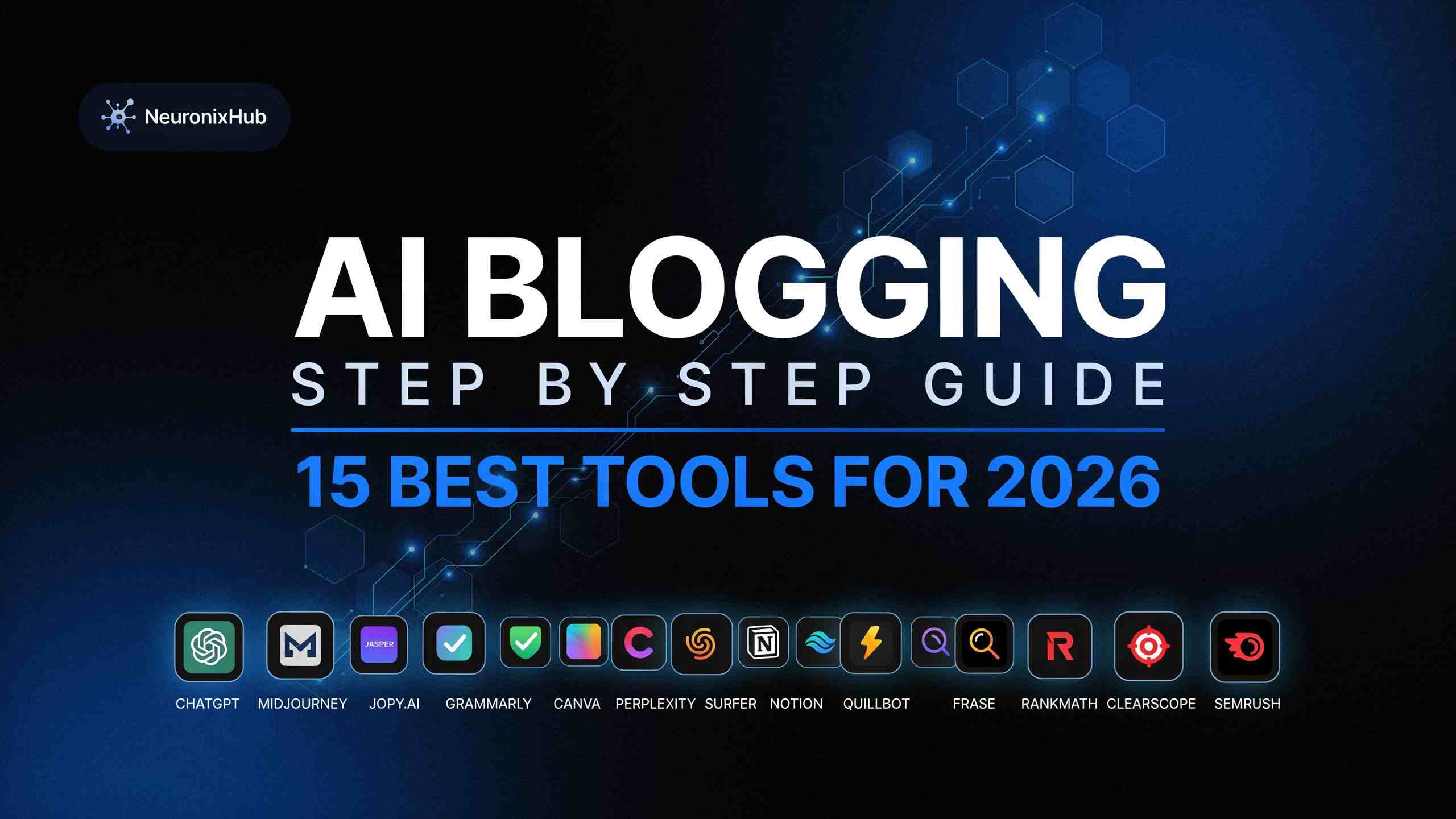
This guide is the AI blogging step by step guide I wish I’d had when I started experimenting with these tools. It pairs a clear, repeatable process with the 15 AI tools actually worth your time in 2026 — for writing, SEO, editing, images, and distribution. No hype, no “10x your traffic overnight” promises. Just a practical path from blank page to published post that still sounds like you wrote it. Let’s start with what AI blogging really means right now.
What Is AI Blogging (and Why It’s Changing in 2026)
AI blogging is the practice of using AI tools to support research, drafting, editing, and optimization — not to replace the writer, but to hand them a faster starting point and a sharper editing process.
How AI Blogging Differs From Traditional Content Writing
Traditional blogging starts with nothing. AI blogging starts with a draft, an outline, or a list of keyword angles already on the page. That changes the writer’s job: less typing from scratch, more shaping, fact-checking, and adding the perspective only a real person can bring.
Why 2026 Is a Turning Point for AI-Generated Content
Two things shifted at once this year. AI models got meaningfully better at nuance and factual grounding, and Google got meaningfully better at telling thin AI output apart from AI-assisted content that’s actually useful. The tools matured. So did the scrutiny.
Is AI Blogging Right for You? Benefits and Limitations
Before you build a workflow around any tool, it’s worth being honest about what AI blogging can and can’t do for you.
Key Benefits of Using AI for Blogging
Done well, AI blogging cuts research and drafting time dramatically, breaks through writer’s block, and makes a consistent publishing schedule realistic — especially if you’re a solo blogger or a lean team. It’s also genuinely good at surfacing keyword gaps and content angles a human researcher might miss on a tight deadline.
Common Drawbacks and Risks to Watch For
None of that makes AI infallible. It still produces factual errors, flat phrasing, and content that reads like everyone else’s content — because, structurally, a lot of it is built the same way. The fix isn’t avoiding AI. It’s never treating its output as finished. Human editing has to be part of the process, not an optional step you skip when you’re busy.
AI Blogging Step by Step Guide: How to Get Started
Here’s the process itself — the part that actually answers “how do I do this,” from a blank topic to a published, optimized post.
Step 1 — Define Your Niche and Content Goals
Get specific about your topic, your audience, and what success looks like — traffic, authority, or leads. AI tools are only as useful as the direction you give them; a vague prompt produces a vague, forgettable draft.
Step 2 — Choose the Right AI Tools for Your Workflow
Match tools to your actual constraints: budget, technical comfort, and content type. A small set of tools that each do one thing well usually beats a single all-in-one platform that does everything passably.
Step 3 — Research Keywords With AI
AI keyword tools process search volume, competition, and intent faster than manual research ever could, and they’re good at surfacing long-tail variations and related questions — the exact phrasing real readers are typing in 2026.
Step 4 — Generate a Blog Outline Using AI
Feed your keyword and goal into an AI tool to produce a structural skeleton — headings, subtopics, logical flow — before you write a single sentence. This is one of the biggest time savers in the entire process.
Step 5 — Write Your First Draft With AI Assistance
Let AI expand that outline into a full draft, but treat it as raw material, not a finished post. Its job here is to kill the blank page and give you momentum, nothing more.
Step 6 — Edit, Fact-Check, and Add a Human Voice
This is the step that actually matters most. Verify every claim, strip out robotic phrasing, and add the opinions, anecdotes, and specifics that only you can bring. This is where AI-assisted content becomes genuinely yours.
Step 7 — Optimize for SEO Before Publishing
Tighten headings, meta descriptions, internal links, and keyword placement using SEO-focused AI tools. Check that readability and structure work for both search engines and the human reading on their phone.
Step 8 — Publish and Promote Your AI-Assisted Blog Post
Publish, then repurpose. AI can quickly turn one post into social captions, a newsletter blurb, or short video scripts — multiplying the return on the time you put into the original piece.
The 15 Best AI Tools for Blogging in 2026
With the process down, here’s where I’d actually spend money or time: 15 tools worth using, grouped by what they’re good for.
Best AI Tools for Writing and Drafting
Jasper remains the go-to for marketing teams that need a consistent brand voice across long-form content, built around dedicated marketing agents and a context layer that stores your style guide and audience profiles. Writesonic fits creators focused on AI search visibility alongside standard drafting. Koala Writer is the budget pick for one-click, SEO-structured articles — a solid option if you’re chasing rankings without a big monthly spend.
Best AI Tools for SEO and Keyword Research
Surfer SEO works less like a writer and more like an optimization layer, scoring your draft against the live search results for your target keyword. Frase offers a similar SERP-driven approach with a stronger research-first angle. RightBlogger rounds this group out with built-in keyword research designed to surface high-intent search terms.
Best AI Tools for Editing and Proofreading
Grammarly remains the reliable default for grammar, tone, and clarity passes. Paperpal, built for academic writing, is a strong fit if your blog leans technical or research-heavy. Jenni AI earns its place when you’re writing case studies or any post that requires solid citations.
Best AI Tools for Images and Visual Content
Canva’s AI features make it easy to produce clean blog graphics without any design background. DALL-E handles custom illustrations and concept art from a text prompt. NightCafe is worth a look if your blog leans creative and benefits from a more stylized visual identity.
Best AI Tools for Repurposing and Distribution
RightBlogger shows up again here, turning long-form posts — and even YouTube videos — into new blog content. Copy.ai is strong at repurposing a post into social captions and email copy. Zapier ties the whole stack together, automating distribution once a post goes live.
Together, these 15 tools cover the entire blogging workflow, from the first outline to the final share.
How to Choose the Best AI Blogging Tool for Your Needs
Fifteen good options is still a lot of options. Here’s how to narrow them down to what your blog actually needs.
Free vs. Paid AI Blogging Tools
Free plans are fine for testing the waters — they’re typically capped on word count or features, which works for occasional posting. Once you’re publishing consistently, paid plans tend to pay for themselves through higher limits, sharper SEO scoring, and brand-voice customization that saves real editing time.
Features to Look for Before You Commit
Before subscribing, check SEO integration, ease of use, and whether the output actually sounds human or reads like a template. Favor tools that slot into your existing workflow — WordPress, Google Docs, whatever you already use — over ones that force you to rebuild your process. A free trial is non-negotiable; test real output before you pay.
AI Blogging Mistakes to Avoid in 2026
Picking the right tools is only half the job. How you use them determines whether your blog grows or quietly fades in search results.
Over-Relying on AI Without Human Editing
Publishing AI output untouched is one of the fastest ways to erode reader trust. Unedited drafts tend to read generic, repetitive, or just slightly off on facts — and both readers and Google notice. Every AI draft needs real scrutiny before it goes live, not a quick skim.
Ignoring E-E-A-T and Google’s AI Content Guidelines
Google evaluates content on Experience, Expertise, Authoritativeness, and Trustworthiness, regardless of how it was produced. Posts that skip firsthand insight or credible sourcing struggle to clear that bar, no matter how polished the prose sounds. The goal isn’t avoiding AI — it’s making sure every post you publish offers something the dozen other AI-assisted articles ranking for the same keyword don’t.
The Future of AI Blogging: Trends to Watch
The tools and the rules are both still moving. Here’s what’s worth tracking next.
AI Personalization in Content Creation
Expect AI to move past generic drafting toward content that adapts tone and examples to specific audience segments. Search itself is heading the same direction, with results growing more personalized to user history and context — which means one-size-fits-all posts will work less often.
How Google’s Algorithm Is Adapting to AI-Generated Content
Google has been consistent on this point: AI-assisted writing isn’t penalized for being AI-assisted. What’s getting hit is undifferentiated, high-volume content that AI simply made cheaper to produce at scale. Heading into the rest of 2026, the advantage goes to posts with real editorial oversight and something genuinely new to say — not to whoever published fastest.
Final Thoughts: Start Your AI Blogging Journey Today
AI blogging was never about replacing the writer — it’s about clearing the friction between a good idea and a published post. You now have the eight-step process, 15 tools worth using, and a realistic sense of where AI helps and where it doesn’t. That last part is what separates the blogs that grow from the ones that plateau. The bloggers who do well in 2026 aren’t publishing the most; they’re the ones using AI to move faster while still sounding unmistakably like themselves. Pick one tool from this guide, run a post through the process above, and edit it like your voice depends on it — because it does. Your blog doesn’t need to sound like AI. It needs to sound like you, just faster.
Frequently Asked Questions About AI Blogging
Does Google Penalize AI-Generated Blog Posts?
No — Google doesn’t penalize content for being AI-generated. It penalizes thin, undifferentiated content, regardless of who or what wrote it. A well-edited, original post produced through AI blogging can rank just as well as one written entirely by hand.
Can Beginners Use AI to Start a Blog From Scratch?
Yes. Beginners are arguably well-suited to AI blogging, since tools can handle outlining, keyword research, and first drafts — freeing new bloggers to focus on developing their voice and niche instead of staring at a blank page.
How Much Does AI Blogging Software Cost?
Pricing varies widely. Many tools offer limited free plans, while paid tiers typically run from around $10 to over $100 a month, depending on word limits, SEO features, and team seats.
What’s the Best AI Blogging Step by Step Process?
Define your niche, research keywords, generate an outline, draft with AI, then edit heavily for accuracy and voice. Finish by optimizing for SEO and promoting the post after it’s published.
Is AI Blogging Good for SEO in 2026?
Yes, when it’s done with care. AI speeds up research and drafting, but ranking still comes down to E-E-A-T — original insight, real expertise, and human editing — not AI-generated volume alone.