A few years ago, starting a blog meant staring at a blank screen for hours, wondering how you’d ever fill it with enough content to attract readers. That’s no longer the reality. AI has reshaped what it means to start blogging — turning what used to be a slow, solo grind into a faster, more strategic process. You can research topics, draft posts, optimize for SEO, and design graphics in a fraction of the time it once took.
But having access to AI doesn’t automatically mean success, and that’s the gap this guide is built to close. The bloggers who thrive aren’t the ones who let AI do everything — they’re the ones who know which tools to use, when to use them, and how to keep their content authentic enough to rank and resonate. If you’re wondering how to start blogging with AI the right way, you’re in the right place. Here’s what that actually looks like in 2026.
What Does It Mean to Blog with AI in 2026?
Blogging with AI used to mean typing a prompt and hoping for the best. That era is over. AI tools have evolved from basic text generators into research-and-writing assistants that understand context, tone, and search intent. Early adopters were satisfied with passable drafts; today’s bloggers expect tools that analyze competitors, suggest structure, and match a specific voice — a shift that’s also raised reader expectations, making generic, AI-sounding content easier to spot and less likely to rank.
That distinction matters because of where AI’s strengths actually sit. It excels at speeding up research, generating outlines, suggesting keywords, and producing solid first drafts. What it can’t do is replace genuine experience or the small human details that make a post feel trustworthy. Treat it as a highly capable assistant, not a replacement writer — the strategy, judgment, and final voice still need to come from you.
Is Blogging with AI Worth It? Weighing the Pros and Cons
The biggest advantage of blogging with AI is speed. Tasks that once took hours — research, outlining, first drafts — now take minutes, making it realistic to publish consistently even with a packed schedule. That consistency matters more than most beginners realize, since search engines and audiences both reward blogs that show up regularly. AI also lowers the barrier to entry for people who aren’t confident writers but have real expertise to share.
The downside is just as real. Google’s E-E-A-T guidelines reward genuine experience and expertise, which AI can’t fabricate convincingly. Overreliance on it often produces generic, interchangeable content that struggles to build trust. There’s also a real risk of accidental plagiarism if outputs lean too closely on existing sources — which is exactly why careful editing isn’t optional.
What You Need Before You Start an AI-Powered Blog
Before any tool comes into play, you need a niche — and this is one decision AI genuinely can’t make for you. The strongest blogs come from a mix of personal interest, real knowledge, and market demand. Pick something you can speak to with authority, since that authenticity is what your AI-assisted drafts will eventually need to reflect.
Next comes the practical groundwork: a domain name, reliable hosting, and a content management system like WordPress. None of this requires AI, but it’s the foundation everything else builds on.
Finally, define your brand voice — your tone, perspective, and the way you talk to readers. Without it, AI tools default to flat, generic phrasing. With it, every prompt you write produces output that actually sounds like you.
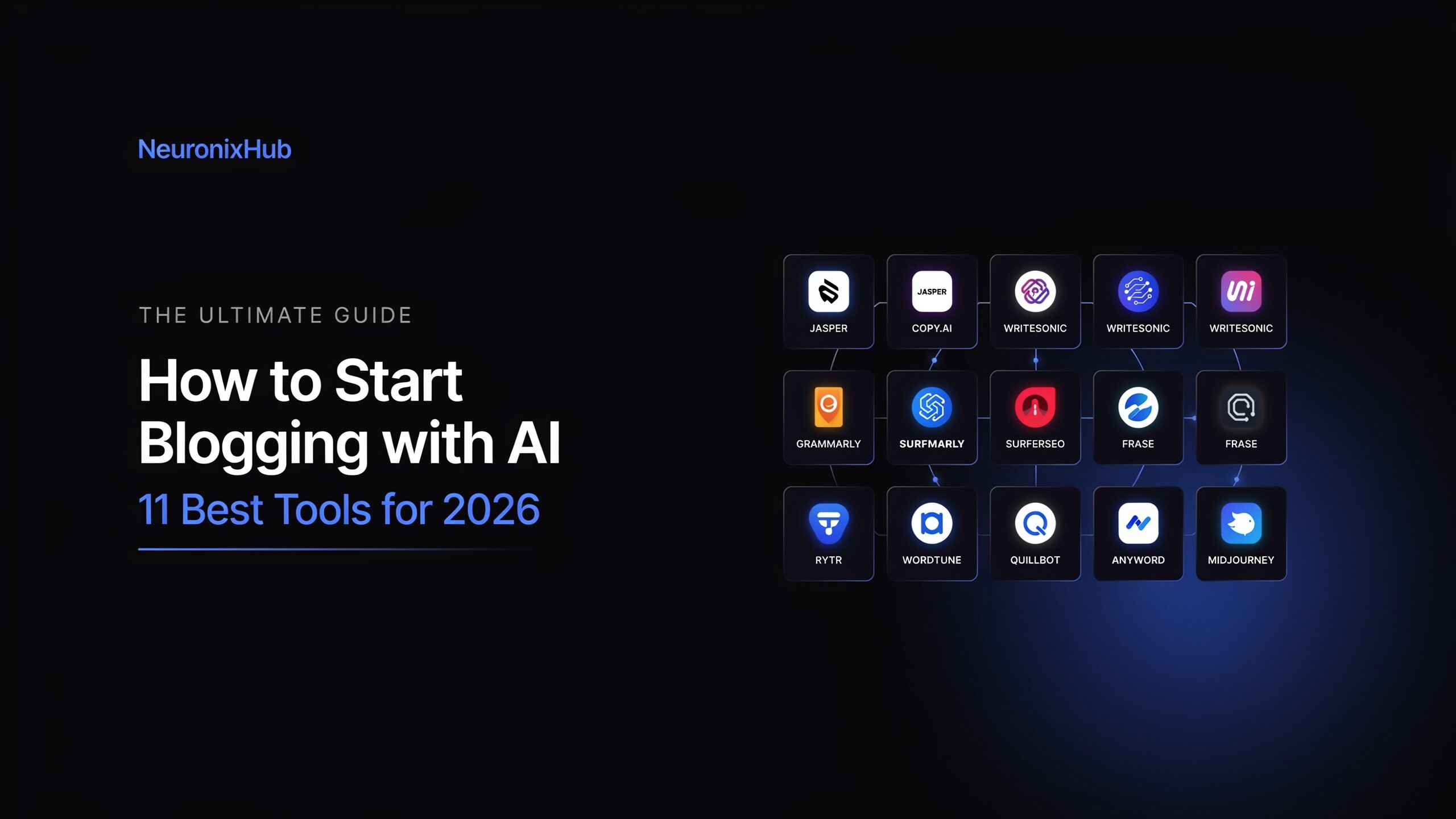
The 11 Best AI Tools for Blogging in 2026
Once your fundamentals are in place, the right tools make the difference between a blog that limps along and one that compounds. Here’s where to start.
Best AI Tools for Content Writing and Drafting
For long-form drafts, Claude is widely considered the strongest pure-chat AI for blog writing, while ChatGPT remains the broadest, most versatile option for ideation and quick drafts. Jasper rounds this out for brand-consistent marketing content.
Best AI Tools for SEO and Keyword Research
Surfer SEO remains the gold standard for on-page optimization, analyzing search intent and recommending semantic keywords and heading structure. Frase is a strong alternative for competitor gap analysis.
Best AI Tools for Editing and Proofreading
GrammarlyGO is the go-to for polishing tone, clarity, and grammar before publishing.
Best AI Tools for Images and Visual Content
Canva’s AI features make designing blog graphics and thumbnails accessible without design skills.
Best All-in-One AI Blogging Platforms
RightBlogger offers a full automation platform with content scheduling, SEO keyword research, and automated publishing across multiple CMS platforms.
How to Start Blogging with AI: A Step-by-Step Guide
Step 1 — Research your topic and keywords. Feed your niche into a tool like Surfer SEO or Frase to uncover what people are actually searching for, along with gaps your competitors have missed.
Step 2 — Generate an outline and first draft. Use Claude or ChatGPT to turn that research into a structured outline, then expand it into a full draft you can build on.
Step 3 — Edit, fact-check, and add your voice. This is where you take over: verify every claim, cut robotic phrasing, and weave in your own experience.
Step 4 — Optimize for SEO. Run the post back through Surfer or Frase to check keyword placement, readability, and heading structure before it goes live.
Step 5 — Publish, promote, and track. Share it across your channels, then monitor rankings and traffic to see what’s actually working.
How to Make AI-Generated Content Sound Human
Adding personal experience is the step most bloggers skip — and the one Google rewards most. Add a real story, a mistake you made, a result you measured. AI can summarize a topic, but it can’t tell readers what actually happened when you tried something yourself.
It also helps to know what to listen for. Watch for telltale AI habits: phrases like “in today’s fast-paced world,” repetitive sentence rhythms, and an eagerness to wrap up every paragraph with a tidy conclusion. Reading your draft aloud is the fastest way to catch these patterns.
Before publishing, run through a quick checklist: every fact verified, the tone sounds like you, transitions feel natural rather than formulaic, and at least one section reflects firsthand insight no AI could have generated alone.
Common Mistakes to Avoid When Blogging with AI
Publishing without fact-checking. AI tools occasionally generate confident-sounding statements that simply aren’t true. Once a reader catches one error, they tend to question everything else you’ve written.
Ignoring Google’s actual guidelines. A common myth is that Google penalizes AI-assisted content outright. It doesn’t — it penalizes low-quality, spammy content. The mistake isn’t using AI; it’s using it carelessly, without adding real value or oversight.
Sounding robotic or overly generic. When every sentence is smooth, balanced, and oddly impersonal, readers notice — even if they can’t say why. That flatness signals low effort, which hurts both engagement and the trust signals Google now actively rewards.
How to Monetize an AI-Assisted Blog in 2026
Tools and workflow only get you so far — eventually, a blog with AI behind it needs to make money too. Once your blog has steady traffic, affiliate links remain one of the most reliable income streams — especially in product-review or comparison posts, where AI can draft the initial structure while your hands-on testing adds the credibility readers trust. Sponsored content works similarly, but only if your blog has a voice brands recognize.
Display ad networks pay based on traffic and engagement, making them a natural fit once your content strategy starts driving consistent visitors — largely passive income, though earnings scale slowly until your traffic does too.
Many bloggers eventually package their expertise into ebooks, courses, or templates. AI can speed up the drafting process here as well, but the value still comes from your specific knowledge — the thing readers are ultimately paying for.
Final Thoughts: Start Your AI-Powered Blog Today
Starting a blog with AI in 2026 isn’t about handing over the keyboard and hoping for the best — it’s about building a partnership. The tools in this guide can research faster, draft quicker, and optimize smarter than you ever could alone. But the blogs that actually succeed belong to people who treat AI as a starting point, not a finish line.
Your experience, your mistakes, your specific way of seeing things — that’s the part no prompt can replicate, and it’s exactly what readers and search engines are both learning to value most. Pick one tool from this list, write one post, and let your voice carry the rest. The technology will keep evolving. What won’t change is that the best blogs still sound unmistakably human, even when AI helped build them.
Frequently Asked Questions About Blogging with AI
How to start blogging with AI and still rank? Google doesn’t penalize AI content itself, only low-quality or spammy output. If you fact-check, edit thoroughly, and add personal insight AI can’t generate, your posts can rank just as well as fully human-written ones.
Do I need to disclose AI use in my posts? There’s no legal requirement to disclose AI assistance on most blogs. That said, transparency builds trust — many successful bloggers mention AI as part of their workflow rather than hiding it.
What’s the best free AI tool for beginners? ChatGPT’s free version is the easiest starting point for beginners learning how to start blogging with AI, offering solid brainstorming and drafting support before you invest in paid tools.
How much does it cost to start an AI blog? You can start for under $50/month total, covering hosting, a domain, and one AI writing tool. Many tools also offer free tiers, so initial costs can be even lower.
Can complete beginners really start blogging with AI? Absolutely. AI lowers the technical and time barriers that once made blogging intimidating, letting beginners focus on developing their voice and expertise instead of getting stuck on a blank page.